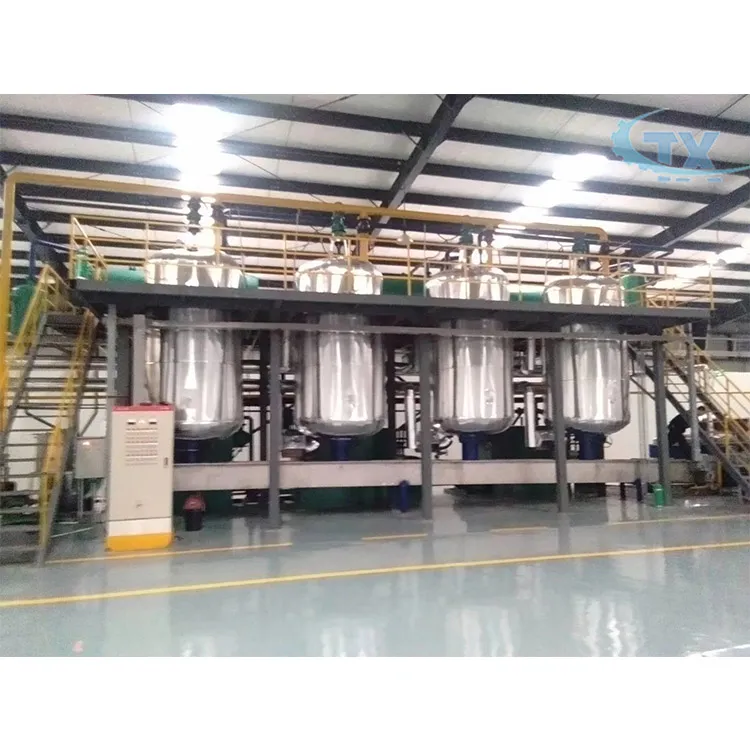
The transformation of crude vegetable oil into high-quality edible oil relies on the sophisticated processes of edible oil refining equipment. As a leading manufacturer in the oil machinery industry, Qi'e Grain and Oil Machinery Co., Ltd. provides advanced refining solutions that systematically remove impurities and undesirable components through four core processes: degumming, deacidification, decolorization, and deodorization. This article explains how each stage contributes to producing safe, stable, and market-ready edible oil.
Edible oil refining equipment transforms crude oil into refined products by sequentially addressing specific quality issues, ensuring compliance with food safety standards and consumer expectations worldwide.
The first critical step in the refining process is degumming, designed to eliminate phospholipids (gums) naturally present in crude oil. These compounds can cause cloudiness, reduce stability, and interfere with subsequent processing.
Qi'e's degumming systems feature precise process control, ensuring efficient gum removal while minimizing oil loss—a crucial factor for oil processing plants aiming to maximize yields.
Deacidification addresses the problem of free fatty acids (FFAs) that contribute to unpleasant taste, lower smoke points, and reduced shelf life in crude oil. This stage is essential for producing oil suitable for human consumption.
Decolorization is responsible for improving the visual appeal of the oil by removing naturally occurring pigments such as carotenoids, chlorophyll, and gossypol. This process also removes certain oxidation products and trace metals.
Key Process Elements:
Qi'e's decolorization equipment features advanced filtration technology that ensures thorough pigment removal while minimizing oil retention in the filter cake, optimizing overall process efficiency.
The final stage in the refining process, deodorization, eliminates volatile odor and flavor compounds, resulting in a neutral-tasting oil with enhanced shelf stability. This process also removes any remaining FFAs and oxidation products.
| Parameter | Typical Range | Purpose |
|---|---|---|
| Temperature | 200-270°C | Vaporize volatile compounds |
| Pressure | 0.5-5 mmHg (vacuum) | Reduce boiling points of volatiles |
| Time | 30-120 minutes | Ensure complete removal |
| Steam Injection | 1-5% of oil weight | Stripping agent for volatiles |
These four core processes—degumming, deacidification, decolorization, and deodorization—operate in sequence, with each stage building upon the previous one to progressively improve oil quality. Modern edible oil refining equipment, like those manufactured by Qi'e Grain and Oil Machinery Co., Ltd., integrates these processes into automated systems with precise control over temperature, pressure, and processing time.
The integration ensures:
"The sequential nature of the refining processes means each stage must be precisely controlled to achieve the desired final product quality. A well-designed edible oil refining system balances efficiency with product quality, ensuring optimal results for different oil types and end-use applications."
Understanding how edible oil refining equipment works provides valuable insight into the technical expertise required to produce high-quality edible oils. Qi'e Grain and Oil Machinery Co., Ltd. combines decades of experience with technological innovation to deliver refining solutions that meet the diverse needs of oil processors across Asia, Africa, and South America. Our equipment not only implements these core processes effectively but also incorporates energy-saving features and user-friendly controls, making us a trusted partner in the global edible oil processing industry.