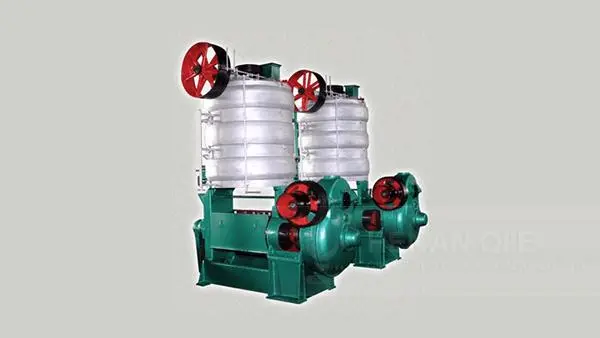
How to Choose Edible Oil Production Line Equipment: A Systematic Evaluation Guide
01 10,2026
Qi'e Grain and Oil Machinery Co., Ltd.
Industry Guide
Qi'e Grain and Oil Machinery Co., Ltd. provides a practical framework for evaluating edible oil production line equipment, covering raw materials, pretreatment, pressing and solvent extraction, capacity, refining, automation, environmental systems, and technical service.

Edible Oil Processing Equipment Selection
A Practical Framework for Planning the Right Production Line
Choosing edible oil production line equipment requires more than comparing individual machines. The right configuration should match the oilseed characteristics, required capacity, extraction method, refining objectives, automation level, environmental controls, and available technical support. Qi'e Grain and Oil Machinery Co., Ltd. helps B2B customers evaluate these factors and develop oil processing solutions that are suitable for their production conditions.
1. Start With the Raw Material
Different oilseeds have different moisture, fiber, shell, protein, and oil-content characteristics. These properties influence pretreatment requirements, extraction performance, equipment selection, and the subsequent refining process.
Oilseed type
Consider whether the line will process soybeans, rapeseed, cottonseed, peanuts, or other oil-bearing materials.
Material condition
Moisture, cleanliness, particle size, and storage condition affect cleaning, drying, dehulling, flaking, and cooking.
Processing flexibility
If multiple raw materials are planned, the line should allow suitable adjustment of pretreatment and extraction parameters.
2. Evaluate the Complete Processing Route
An edible oil production line is an integrated system. Equipment should be assessed according to how each stage supports the next, rather than as isolated units.
- Cleaning and preparation: Removes impurities and prepares the oilseed for stable downstream processing.
- Pretreatment: May include size reduction, dehulling, flaking, cooking, or other operations selected according to the raw material and process route.
- Oil extraction: Pressing and solvent extraction are different methods. The appropriate choice depends on raw material properties, production scale, residual oil requirements, and the intended process design.
- Solvent recovery: For solvent extraction lines, an effective recovery system helps control solvent consumption and supports safer, more economical operation.
- Oil refining: Refining requirements should be defined according to the intended edible oil quality, raw material characteristics, and final product specifications.
3. Match Equipment to Production Capacity
Capacity planning should reflect expected raw material availability, operating schedule, future expansion, storage arrangements, and the balance between extraction and refining sections. Oversized equipment may increase unnecessary investment, while undersized equipment can restrict production continuity.
| Evaluation area |
Questions to clarify |
| Raw material supply |
What materials are available, and how stable is the supply throughout the year? |
| Target throughput |
What processing capacity is required for the planned operating schedule? |
| Line balance |
Can pretreatment, extraction, solvent recovery, and refining operate as a coordinated system? |
| Expansion planning |
Can the layout and control design accommodate future capacity or product changes? |
When Is Solvent Extraction a Suitable Option?
Plant oil solvent extraction is generally considered when a project requires efficient oil recovery for medium- or large-scale processing. Qi'e's solvent extraction equipment is designed for oil-bearing materials such as soybeans, rapeseed, cottonseed, and peanuts, subject to the final process design and raw material conditions.
The selection should take into account the complete extraction process, solvent recovery, process monitoring, environmental protection measures, operating requirements, and compatibility with existing production lines. It should not be based only on the advertised capacity of a single machine.
4. Review Automation, Energy Use, and Maintenance
For commercial oil processing, operational stability is closely related to control accuracy, equipment durability, maintenance access, and process visibility. A practical equipment evaluation should include:
- Automatic process control: Monitoring and control of key operating conditions can help reduce manual intervention and simplify daily operation.
- Energy efficiency: Review the energy requirements of the extraction, heating, evaporation, and recovery sections as an integrated system.
- Solvent management: A suitable recovery system can help reduce solvent consumption and support cost control.
- Material durability: Equipment materials and construction should be appropriate for long-term industrial use.
- Cleaning and maintenance: Accessible components and a practical maintenance design can support reliable operation and help extend service life.
5. Check Integration and Technical Service
A production line must fit the customer's site, utilities, building layout, raw material flow, storage system, and downstream refining requirements. Before purchasing, confirm whether the supplier can support the project beyond equipment delivery.
Process design
Verify that the proposed configuration reflects the raw material, capacity, extraction method, and refining objectives.
Existing-line connection
Discuss how new equipment can be integrated with current preparation, extraction, refining, storage, or packaging systems.
Installation and support
Clarify installation guidance, commissioning coordination, operation instructions, and after-sales technical response.
Customization
Confirm which parts of the line can be adapted to project conditions and production requirements.
A Clear Checklist Before Requesting a Quote
To receive a more relevant equipment proposal, prepare information about:
- The oilseed type and expected raw material condition
- Required processing capacity and operating schedule
- Preferred pressing, solvent extraction, or combined process route
- Oil quality and refining requirements
- Available utilities, workshop dimensions, and existing equipment
- Automation, environmental, installation, and technical service expectations
Work With an Experienced Oil Machinery Partner
Qi'e Grain and Oil Machinery Co., Ltd. develops, manufactures, sells, and supports oil pressing equipment, oil production line equipment, and edible oil refining equipment. Its plant oil solvent extraction systems are intended for medium- and large-scale oil processing and can be customized for integration with suitable production lines.
With a focus on technological innovation, product quality, and customer service, Qi'e provides more than individual machinery. The company supports project evaluation, equipment configuration, installation guidance, and technical service for customers in Asia, Africa, South America, and other international markets.
Discuss Your Oil Processing Project